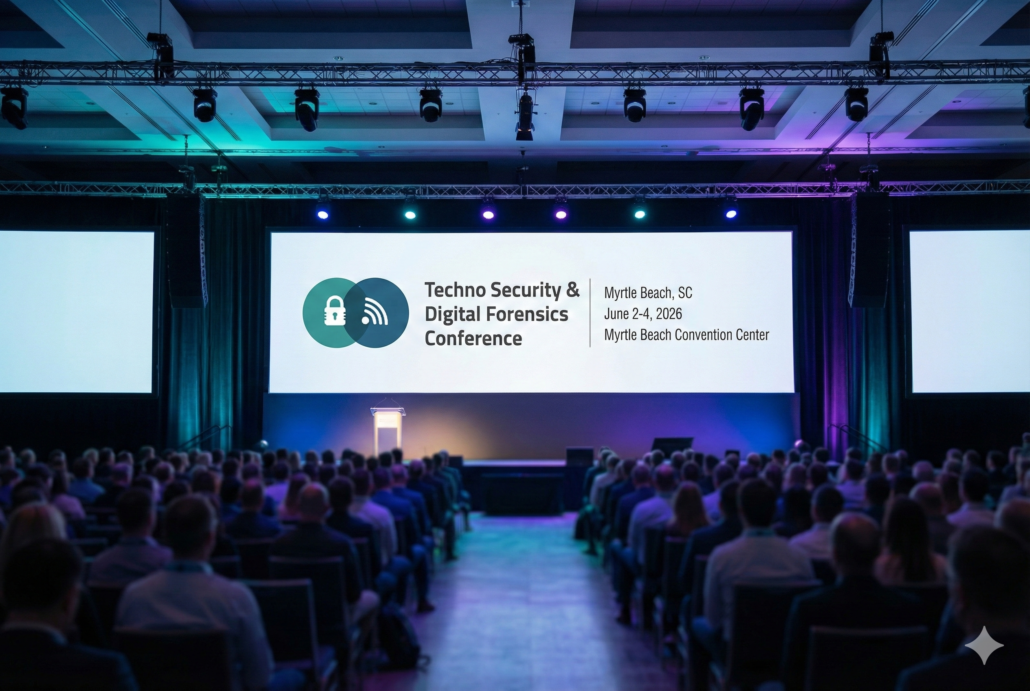
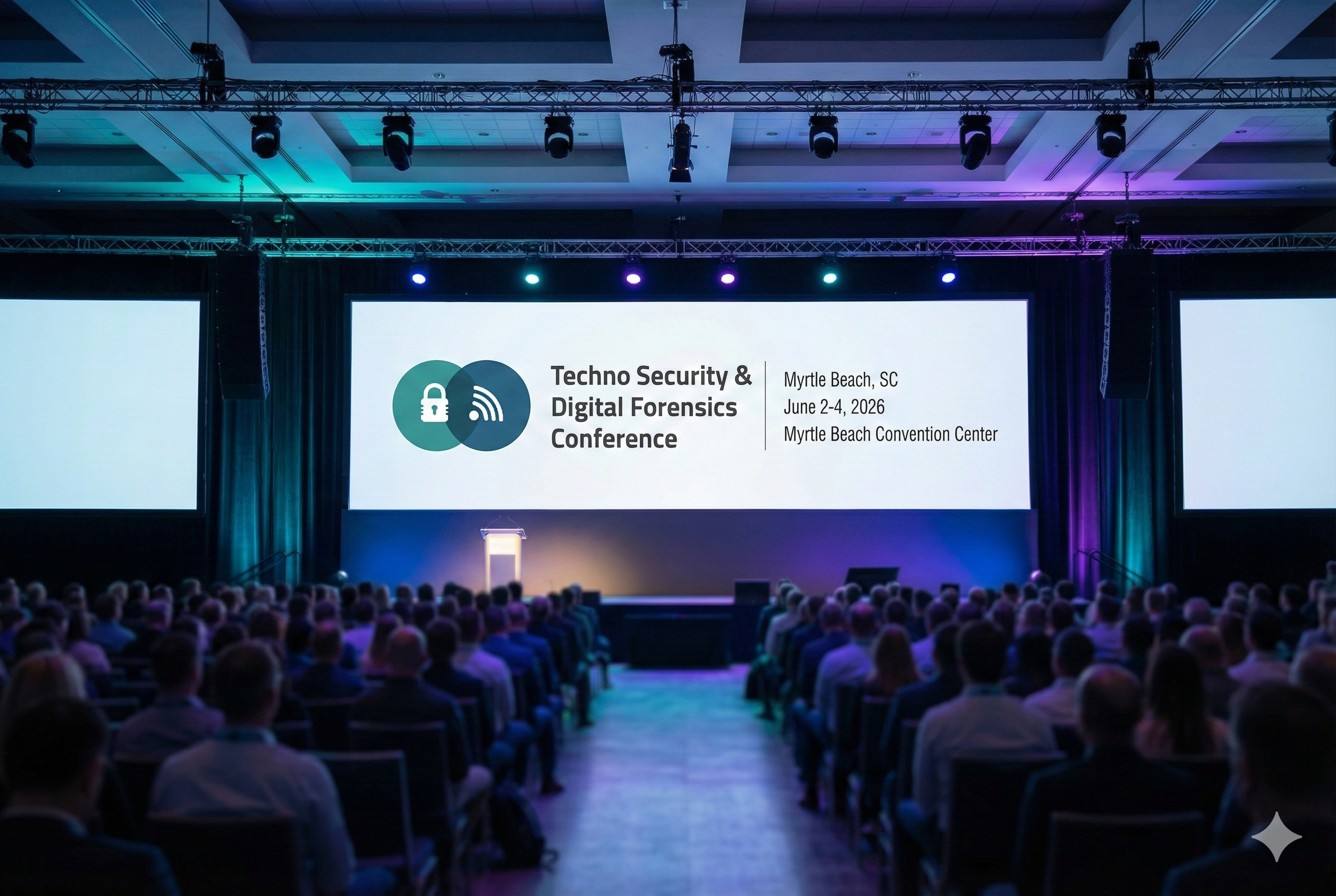
For the third time, I’ve been invited to take the stage at the Techno Security & Digital Forensics Conference — and I couldn’t be more excited about this one.
Digital evidence doesn’t lose cases because it’s weak — it loses cases because of how it was handled, preserved, documented, and presented. That’s the premise behind my upcoming presentation, “25 Lessons That Make or Break Your Case: A Court-Ready Digital Evidence Playbook,” which I’ll be delivering at the Techno Security & Digital Forensics Conference.
I’m honored to be returning to the Techno Security stage for the third time. As both a practicing attorney and a certified digital forensics examiner, this conference has always been the ideal venue for the kind of work I’m most passionate about — the space where forensic methodology meets courtroom scrutiny.
About the Conference
For those unfamiliar, the Techno Security & Digital Forensics Conference is one of the most established and nationally recognized events in the digital forensics and legal technology space. Now in its 27th year, the conference draws attendees from across the United States and more than 15 countries, bringing together forensic examiners, attorneys, eDiscovery professionals, law enforcement, and corporate practitioners. With dedicated session tracks in eDiscovery, digital forensics, and investigations, and over 120 sessions per edition, it has become a must-attend event for anyone working with electronically stored information (ESI) in legal and regulatory contexts.
What to Expect from the Presentation
This isn’t a theoretical deep dive — it’s a practitioner’s playbook. The 25 lessons I’ll be covering are drawn from real-world experience across litigation, regulatory matters, and internal investigations. Topics will include:
- Forensic acquisition and preservation of ESI — what holds up and what doesn’t when opposing counsel challenges your collection methodology.
- Chain of custody documentation — the overlooked details that can unravel an otherwise solid case.
- Authentication under the Federal Rules of Evidence — how courts actually evaluate digital evidence, and the common mistakes that lead to exclusion.
- eDiscovery workflow pitfalls — where the process breaks down between legal teams and forensic examiners, and how to prevent it.
- The EDRM in practice — applying the Electronic Discovery Reference Model beyond theory to real case workflows.
- Expert testimony considerations — preparing to defend your methodology on the stand.
The overarching theme is one I come back to in everything I do: bridging the gap between the technical and legal sides of digital evidence. Too often, forensic examiners produce technically sound work that fails in court because the legal framework wasn’t considered, and attorneys request evidence without understanding the forensic realities of what’s possible. This presentation speaks directly to both audiences.
Why This Matters for Our Clients
At Legal Tech Dynamics, this is exactly the kind of work we do every day. Whether we’re assisting law firms with forensic collections, supporting eDiscovery workflows, or consulting on the admissibility of digital evidence, our approach is always rooted in both technical precision and legal defensibility. The lessons I’ll be sharing at the conference are the same principles that guide how we serve our clients.
If you’re attending the conference, I’d love to connect. And if you’re a legal professional or organization looking for forensic and eDiscovery support that understands the courtroom as well as the lab, reach out to us — we’d be happy to talk.
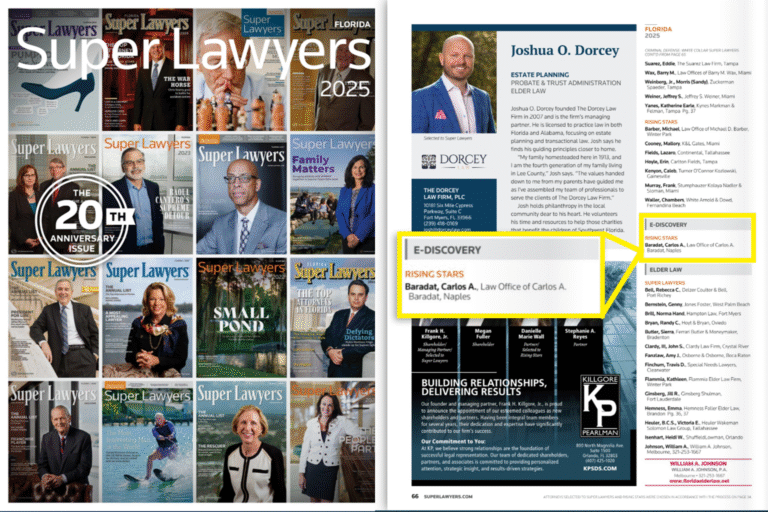
Carlos A. Baradat, is the founder of Legal Tech Dynamics, a digital forensics and eDiscovery consulting firm, and the host of The Virtual Jurist podcast. He is a practicing attorney, adjunct professor, and Past Chair of The Florida Bar Standing Committee on Technology.